

More information / Press / Speaker interviews / Interview with Kris Neyens: Intenationalisation Manager at VIL Flanders
Interview with Kris Neyens: Internationalisation Manager at VIL Flanders
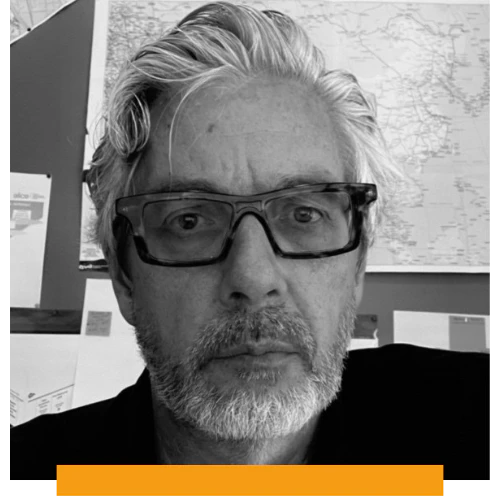
Interviewee's name: Kris Neyens
Interviewee's website: https://vil.be/en/
Q: What is the ReNEW project, and what are its key aims?
A: Climate change is significantly impacting the performance of inland water transport (IWT) operations, making it essential to develop and test new solutions that are both climate-neutral and climate-resilient. Traditionally, the waterborne sector has taken a passive and conservative approach towards innovation, showing reluctance to adopt digital solutions and best practices. The key objectives of ReNEW are to deliver:
- A decision support framework that includes resilience and sustainability quantification, aiding in the strategic planning and operational optimization of environmentally friendly and resilient IWT.
- Innovative solutions for infrastructure resilience and sustainability.
- A green resilient IWT dataspace and digital twin that facilitates data sharing among infrastructure monitoring, River Information Services (RIS), traffic management, and emergency systems.
- Four living labs to demonstrate these solutions in practice.
- An outreach and scaling program aimed at maximizing impact pathways, focusing on capacity building and policy recommendations
Q: What are the biggest barriers to implementing climate-resilient inland waterway transport across Europe?
A: There are several barriers but the MAIN barriers consist of:
Outdated or inadequate regulations for rapidly evolving remote, autonomous, and zero-emission vessels (ES-TRIN) hinder the broader deployment of innovations. It is essential to have modern (smart) infrastructure, develop digital skills, and create inclusive monetary investment programs.
Q: How do you see digitalization, such as digital twins and data spaces, transforming the future of inland waterway logistics?
A: To advance green and resilient inland water transport (IWT), Digital Twins play a crucial role in visualizing and simulating alternatives that may be more effective than the initially planned solutions, based on real data.
With enhanced situational awareness, Digital Twins can provide real-time navigability assessments for specific sections of waterways, as well as real-time connectivity with water level data and operational conditions at major ports and locks. They assess the operational, economic, and environmental performance of transport along waterways by simulating various scenarios and proposing improvements.
When implemented effectively, Digital Twins have the potential to enhance the relevance and interconnectivity with other modes of transport.
Q: ReNEW emphasises collaboration between stakeholders in the supply chain. What lessons have you learned about fostering effective partnerships between public, private, and academic sectors?
A: The main challenge lies in the varying speeds at which innovation frameworks, private investment, and policy development evolve. This discrepancy can complicate discussions about the potential of these innovations. To address this issue, we have created a set of policy recommendations aimed at improving these interactions by providing an actionable roadmap.
Q: What will you discuss during your session at Intermodal Europe?
A: I will advocate for pick-up on the learning of the project and at least pick-up on the possibilities of IWT and the actionable recommendations made for the different solutions explored:
- For modular pontoons
- For waterway infrastructure resilience management
- For data management
- For highly automated / autonomous vessels
- For better risk analysis For effective digital twins
The focus will lie where the discussion and other panellists lead us.
A web link will be made available to the tools and website, as well as the capacity building and policy recommendations.